
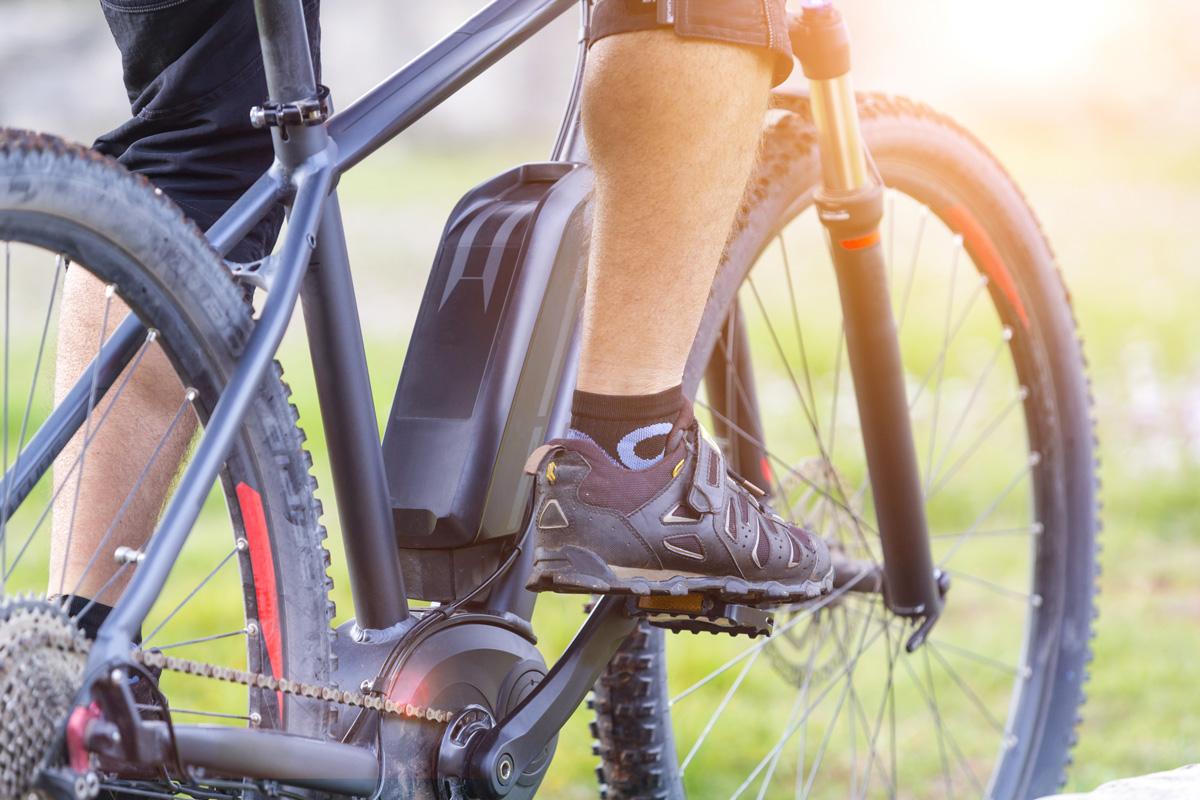
Micromobility is small personal transportation, often used for short trips. Electric micromobility options have many benefits for individuals and communities.
Electric micromobility is defined as vehicles that use an electric motor. The motor helps with or replaces pedaling. A rechargeable battery powers the motor.
Types of electric mobility
- E-bikes are defined by California law as a "bicycle equipped with fully operable pedals and an electric motor of less than 750 watts." Be aware that if you are buying or riding a "bike" that does not meet this definition (for example, a throttle-only bike) then you are actually riding a moped or motorcycle. Pedal-assist provides help only when the rider is pedaling. This is a popular choice for those who want to maintain an active lifestyle while getting a boost. There are three classes of e-bikes:
- A Class 1 e-bike has a pedal-assisted motor. It provides power only when pedaling. The motor turns off when the bike hits 20 mph. No minimum age under California law. Helmets required if under age 18.
- A Class 2 e-bike provides throttle-assisted power up to 20 mph even when the rider is not pedaling. Starting July 1, 2025, it will be illegal for anyone under 16 to operate a Class 2 e-bike in Marin County.
- A Class 3 e-bike has a pedal-assisted motor up to 28 mph. It provides power only when pedaling. Operators of Class 3 e-bikes must be 16 or older, and all riders of Class 3 e-bikes are required to wear a helmet.
- Schools may also set additional restrictions for student use. Parents, be sure to check with your local school before purchasing an e-bike.
- Visit the Marin E-Bikers Club to learn more about Marin's new e-bike laws and take the pledge to operate your e-bikes safely.
- Electric scooters have a narrow platform and handlebars to steer. People ride some scooters standing on the platform, while others have a seat. With a range of 10 miles and top speed of 15 mph, electric scooters are a perfect vehicle for short commutes. Operators of electric scooters must be 16 or older.
- Electric skateboards have motors inside the wheels and a battery attached to the deck. These skateboards have a remote control and reach high speeds quickly.
- Self-balancing boards use gyroscopic technology to maintain balance. You stand and steer by leaning in the desired direction. One wheel, two wheels or two wheels with a vertical handlebar are options.
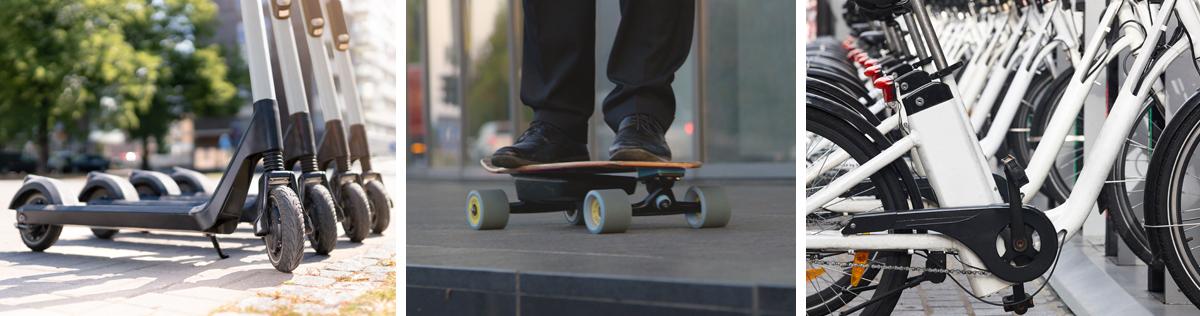
Always be safe when riding, whether you're on a traditional bike, an e-bike, or an e-scooter. Check out our E-bike Safety page to learn more.
Using electric transportation like e-bikes and EVs can help you save money and is good for the environment. Our savings calculator and incentive finder tools can help you learn how much you can save.
Benefits of micromobility
Electric micromobility is a great option whether navigating crowded cities or getting around more rural areas. Some benefits include:
- Zero air pollution
- Good source of exercise
- Reduce cars on the road
- Reduce parking shortages
- Available to people of various fitness levels and age groups
- Less expensive to purchase and maintain than vehicles
Active transportation improves both personal and community health—anytime we choose to walk or ride we're helping the environment, reducing road traffic, and improving our fitness.
E-bike considerations checklist
Ensure you pick the right option for you and your lifestyle. A few things to think about when considering an e-bike or other short-distance vehicle:
- Learn the rules and age restrictions for the e-bike categories and make sure you get the right bike for the rider.
- Where do you need to go?
- How far is your local commute? What bike paths or roads take you there?
- Visit a bike shop. Or use an online model comparison tool to shop.
- Consider different criteria like the weight or body type and more.
- Consider rebates, vouchers, and incentives for different types and styles of micromobility.
- Learn how charging an e-bike and other micromobility options works.
- Can you charge at home or work?
- Does the battery detach from the frame or vehicle body?
- Where will you store your e-bike at home or while at work?
When you are not riding your e-bike, it's important to consider storage and security.
- Do you have a space to securely store the e-bike?
- If not, do you have access to a bike rack?
- What type of bike rack is needed to accommodate the weight of your e-bike?
- What type of bike rack is needed to securely lock up your bike in public or shared spaces?
- What is the best locking mechanism to protect your bike?
- Where is the bike rack located? Is it dry and shaded? You might consider buying an e-bike cover to protect your bike from the sun and moisture.
- If your e-bike has a removable battery, think about keeping the bike and battery in separate places.
Related
-
Using your e-bike safely
Learn about e-bike safety and tips.
-
E-bike laws to know
Learn about county and state laws for e-bikes and other electric micromobility options.
-
Electric transportation
Learn the basics and benefits of electric transportation and how you can get started on your EV or E-bike journey.
- Marin E-Bikers Club Countywide public educational campaign promoting safe e-bike riding habits for Marin youth.