Body of News Release
Marin County, CA – The overall quality of the roads in unincorporated Marin County keeps getting better, according to an independent assessment.
The Marin County’s Pavement Condition Index (PCI) has reached a milestone of 70, up two points from its December 2023 score and up four points from its index from two years earlier. Based on the most recent data published in the California Statewide Local Streets and Roads Needs Assessment, the latest measured statewide average PCI is 67.
“This represents a significant milestone and reflects the County’s ongoing commitment to reducing deferred maintenance and investing strategically in its transportation infrastructure,” said Christopher Blunk, Director of the Marin County Department of Public Works (DPW). “The Board of Supervisors’ continued commitment to pavement funding has been instrumental in supporting this progress. By maintaining a focus on proactive maintenance rather than reactive repairs, the County is improving its roads while reducing long-term costs and protecting the value of its transportation network.”
PCI is a measure of roadway quality that provides a snapshot value of each road segment on a 100-point scale, with 100 being a newly paved road. The County’s score is determined by independent engineering consultants using standardized methods. Many factors affect PCI scores including pavement age, climate and precipitation, and traffic loads. The average score of all County-maintained road segments represents the overall road network PCI.
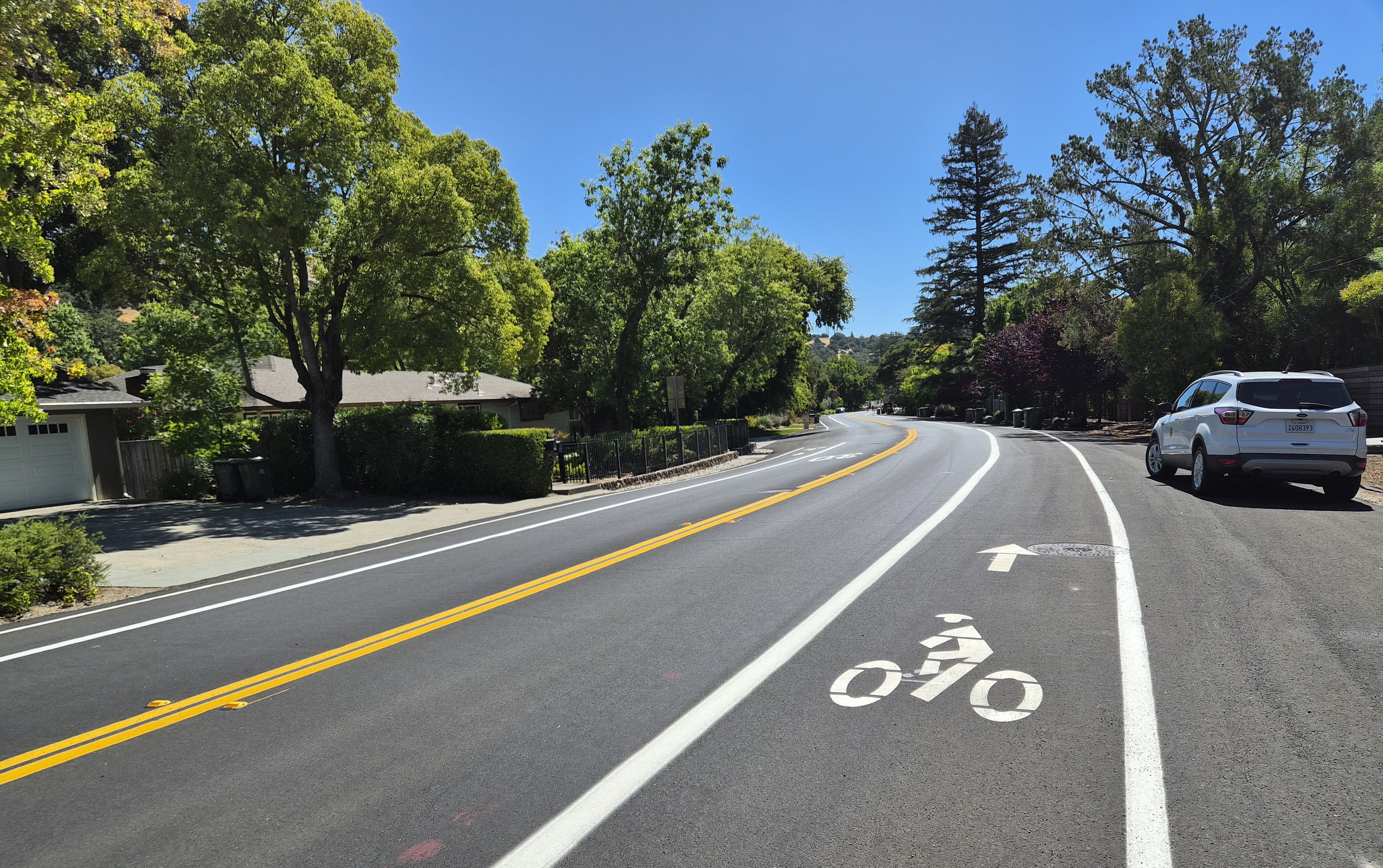
During the past year, DPW treated approximately 29 centerline miles of roads with micro-surfacing and other maintenance seals, completed 8 miles of pavement reconstruction, and performed nearly 30 miles of isolated failure repairs in preparation for upcoming sealant work. The efforts reflect a balanced approach that prioritizes applying the right treatment at the right time to maximize the benefit of each dollar invested.
DPW maintains over 420 miles of local roads, which are critical infrastructure that people rely on every day to conduct their business, connect with surrounding communities, visit popular attractions, explore Marin’s beauty, and live their daily lives.
In addition to improving safety and ride quality, the pavement program delivers pavement preservation with important environmental benefits. Preserving existing roadways reduces the need for resource-intensive reconstruction, lowers greenhouse gas emissions associated with trucking and materials, and minimizes impacts to surrounding neighborhoods.
Improvements and ongoing maintenance of the road network is a major responsibility for DPW, and it is a commitment that requires significant planning and funding. The County’s Pavement Management Program is a hybrid strategy of pavement preservation, pavement rehabilitation, and road reconstruction projects. The program budget comes from three sources: the County’s General Fund, regional tax measure funding (Tam Measure AA), and California Senate Bill 1 funding. Additionally, DPW staff continually seeks grant funding to bolster the budget. The long-term goal is to maintain a quality road network across unincorporated Marin in the most efficient and cost-effective manner possible.
Using funds from the Pavement Technical Assistance Program, a grant administered by the Metropolitan Transportation Commission, DPW expects to publish a 2026 Five-Year Paving Plan in spring 2026 that will outline where pavement work is anticipated over the next five years. Projects are selected through a multi-criteria evaluation process that considers pavement condition and performance, lifecycle cost effectiveness, available funding, and adopted program priorities, as well as additional lenses including safety, equity, coordination with other capital and utility projects, regulatory requirements, constructability, delivery timing, and operational impacts at the time the plan is developed.
The 2026 plan update will include a new online and interactive pavement map that will show planned pavement work locations and recent roadway treatments, providing residents with a clearer picture of where work is anticipated to occur.