

Body of News Release
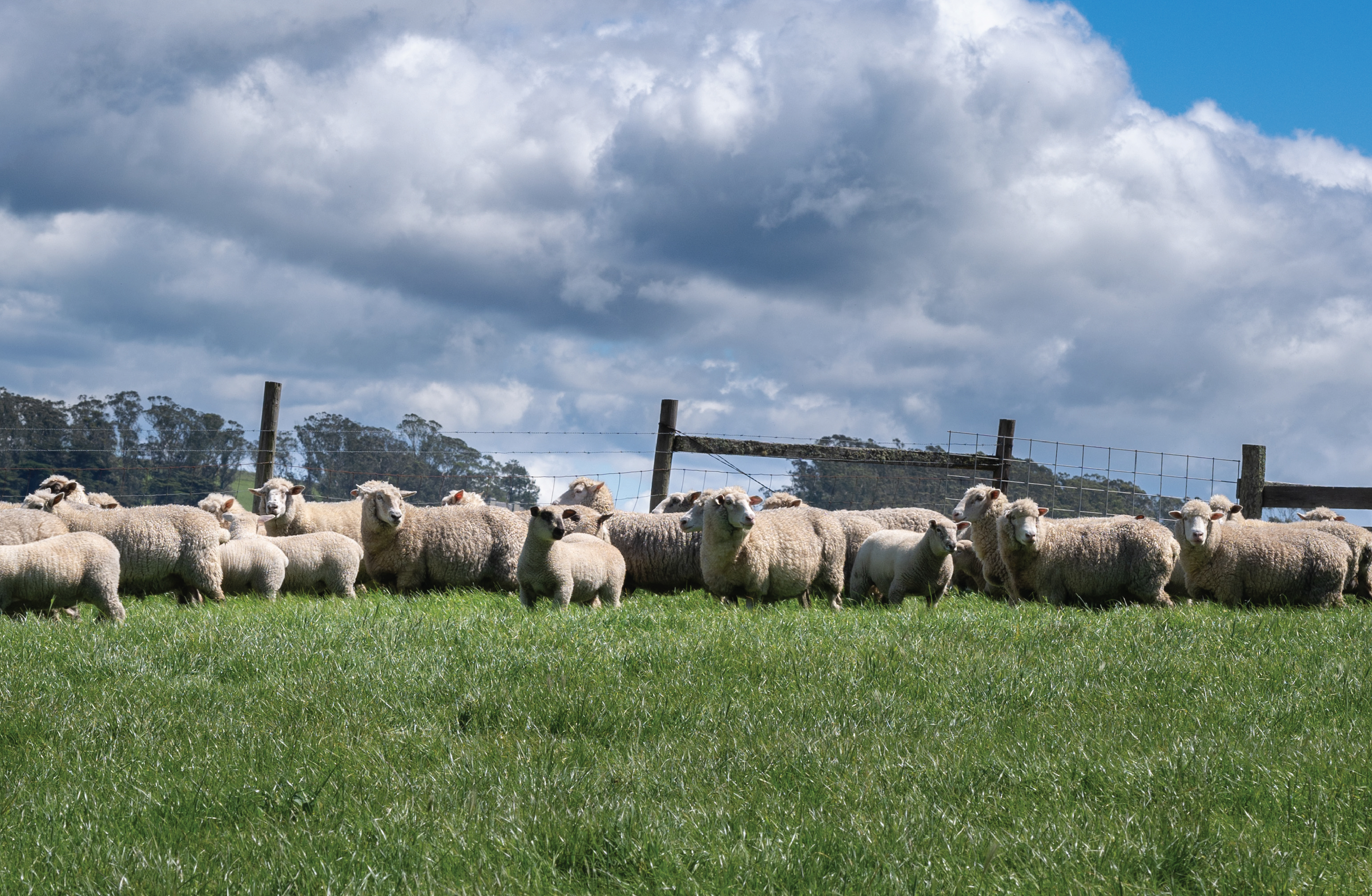
Marin County, CA – Marin County’s climate suits sheep well, and wool is tightly woven into the fabric of local agriculture. The annual Crop and Livestock Report, compiled and released by the Marin County Agricultural Commissioner’s Office, included a new analysis of the local sheep industry and presented it to the Marin County Board of Supervisors on August 25.
The report, which included details and statistics from 2025, showed wool production at 24,700 pounds for the year and a gross value of $40,000. Although that’s a relatively modest number when considering the total gross value of Marin’s 2025 agricultural production worth $94,134,000, County officials see it as one of the greatest opportunities for creating additional value through local processing and manufacturing.
Synthetic fabrics such as polyester and nylon are made from fossil fuels and shed microplastics into waterways and soils every time they’re washed. In contrast, natural fibers, such as the wool produced by West Marin ranchers are biodegradable, locally sourced, and part of a growing regional economy built around regenerative agriculture. The wool is ideal for clothing, yarn, bedding, insulation, air filters, and other products. Local sheep were also stars of the show when the County celebrated Plastic Free July.
“A goal with this year’s report is to lift up and advance knowledge of Marin’s wool production, products, and wool alternatives to plastics/synthetic products,” said Agricultural Commissioner Joe Deviney. “When the Board of Supervisors recognized Plastic Free July, we really gained momentum on public awareness about how agriculture can help reduce our plastics consumption. People either forget or aren’t aware that plastics show up in a lot of our clothing and everyday products. Wearing local wool and using natural fiber alternatives support our sheep production and is a great way to help reduce reliance on fossil fuels.
“In the coming years, we’re looking into ways to infuse economic value into the wool produced here in Marin and regionally,” he continued. “There’s a lot of potential to tap into the growing interest in natural and local fibers as more people seek alternatives to synthetic materials in clothes, filters, green building materials, textiles, landscape cloth, and dozens of other products.”
Sheep provide much more than wool to the ag economy. They provide meat, grazing services, and fiber, making them particularly useful in a diversified ag system. They not only thrive in Marin’s Mediterranean climate but contribute to land conservation goals. However, most of the added value from cleaning, carding, spinning and manufacturing is captured outside Marin and California because local processing is limited.
“This summer, as our concerns rise about wildfire danger, we want to underscore the beneficial use of sheep grazing in wildfire fuel reduction, which is critical to emergency preparedness and public safety,” Deviney said.
Overall, the total gross value of agricultural production jumped 12% in 2025, from $83,817,000 in 2024 to $94,134,000. The fresh figure included 10,300 head of sheep and lambs worth a total of $2,575,000.
The 2025 agricultural season in Marin benefited from above average rainfall, which supported exceptional rangeland growth and lowered feed and operating pressures for local producers. That worked out nicely for beef producers in Marin. Cattle and calves were valued at $23 million, making that category the top-grossing commodity in this year’s report. In fact, beef prices reached record highs statewide and nationally as herds recovered from drought years, creating one of the most financially positive cattle seasons in recent memory. Together, those conditions provided stability, improved livestock health, and supported the economic resilience of Marin’s ranching community.
Poultry’s gross value was $22,364,000, making it No. 2 on the county’s livestock and aquaculture list. Aquaculture was next at $8,500,000, marking an impressive increase from $6,400,000 in 2024. In terms of products from livestock, organic milk led the way with a gross value of $21,452,000, roughly the same as one year earlier. Conventional milk also remained steady but at a much smaller economic yield at $1,525,000.
The Agriculture Commissioner’s Office, based in Novato, submits its annual crop and livestock reports to the California Department of Food and Agriculture for inclusion in its statewide data.