
Body of News Release
Marin County, CA – Water quality at Marin County beaches showed some mixed results but mostly good grades this past year, according to the 35th annual report from Heal the Bay. The annual report rates water quality at beaches along the U.S. West Coast.
The majority of Marin beaches continued to receive strong A and B grades during the summer and dry weather. In fact, 86% of Marin beaches received A’s and B’s. This year’s report also showed that 91% of California beaches received A and B grades in summer dry conditions; 89% in winter dry conditions; and 76% during wet weather.
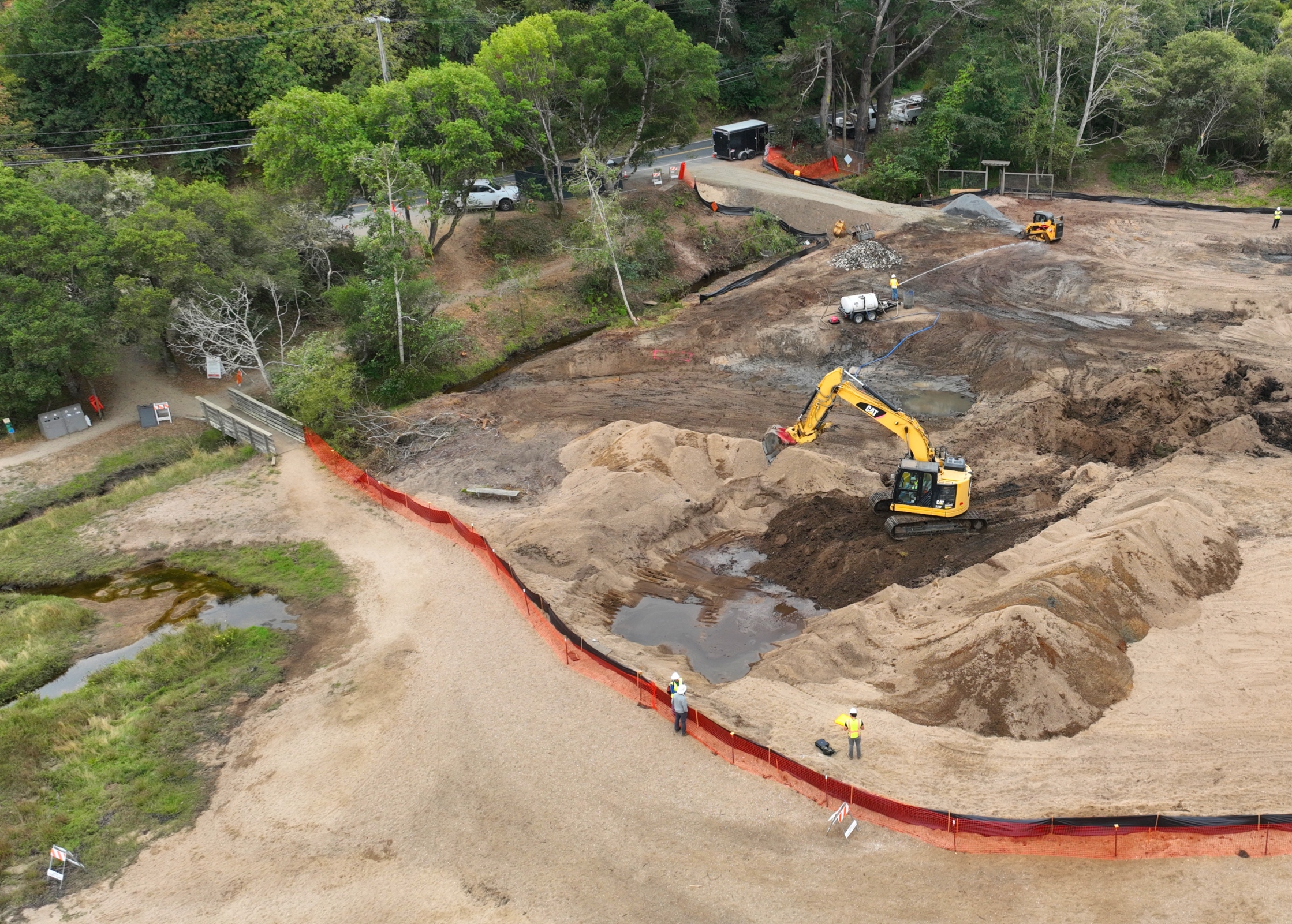
However, on the west side of Tomales Bay near Inverness, Chicken Ranch Ditch at Channel B was listed as the No. 4 “Beach Bummer” in the state due to elevated bacterial levels caused by stormwater runoff and shallow groundwater across the beach. The proposed planned restoration project aims to improve the water quality and wetland restoration in the area. The project is led by the Tomales Bay Watershed Council Foundation (TBWCF) with support from the U.S Fish and Wildlife Service, the California Coastal Conservancy and Marin County Parks.
The work targets Channel B, a man-made ditch that has carried elevated levels of bacteria into Tomales Bay. About 230 feet of the ditch will be filled and redirected through a meandering wetland with shallow pools that naturally filter water before the water flows into Third Valley Creek. Construction began in August and will continue for about two months.
Marin’s water quality monitoring program, overseen by the Marin County Community Development Agency’s (CDA) Environmental Health Services Division (EHS), gathered data from 31 bayside and oceanside monitoring locations over 31 weeks from April 2024 through October 2024 to come up with the grades. Twenty-six of the sites are marine beaches and five are fresh water recreational sites. The beaches are managed by a variety of agencies: 12 federal beaches, five state beaches, eight County beaches, and six local or privately managed beaches. Two intermittent creeks -- Chicken Ranch Ditch at Chicken Ranch Beach, and Dillon Beach Ditch at Dillon Beach -- are measured when there is enough water for sampling.
When looking at the summer dry average grades of Marin sites in a span of five years, 100% of beach sites received A's and B’s. During the wet weather average events from April through March, 17 sites received A and B grades, and only four sites received C and F grades. The five-year wet weather beaches grade average is 82%.
In terms of rainfall, California saw 9% less rain (357 inches) compared to the 10-year average of 392 inches. Heal the Bay reports Marin received 24 inches of rain between April 1, 2024, and March 30, 2025, a 7% increase from the historical 10-year average of 22 inches. The full impact of the decreased rainfall in winter months is difficult to assess, because most of the local beaches are not monitored during winter.
Rain alleviates drought conditions, but it also results in more pollutants, including bacteria, being flushed into streams, the bay, and the ocean. Pushed by rainwater, contaminants flow from streets in the form of trash, fertilizer, pet waste, metals, and automotive fluids.
Marin experienced multiple sewage spills during the 2024-25 observation period, resulting in approximately 55,000 gallons of wastewater reaching surface waters across 25 incidents, according to the California Environmental Protection Agency website.
The spills in question, falling under the jurisdiction of various sanitation districts, have been diligently addressed by the responsible authorities. The spills were promptly reported, and appropriate measures were taken to mitigate any potential impact on the environment and public health. Of the total volume, 15,000 gallons entered Marin waterways. It is important to note that these incidents did not affect any recreational beaches monitored in the area.
Heal the Bay, based in Santa Monica, has analyzed water quality data in California beaches each year since 1991. The Beach Report Card is funded by grants from the Surf Industry Manufacturers Association, Sony Pictures, and the Grousbeck Family Foundation. See the full report at HealtheBay.org.
Marin EHS has monitored ocean, bay, and freshwater sites since 2003 and posts sample results weekly. The samples are processed by the Napa-Solano-Yolo-Marin County Public Health Lab. The tests quantify the most probable number of total coliform, E. coli, and enterococcus bacteria present in each water sample.
An advisory sign is posted to alert the public if lab results indicate water samples exceed the State of California standards for recreational waters. The California Department of Public Health advises beach users to avoid contact with recreational waters where advisory signs are posted. People in contact with elevated bacteria levels in recreational waters may become ill.
Heal the Bay recommends beach users never swim within 100 yards on either side of a flowing storm drain, creek, or river in any coastal waters during a rainstorm and to stay out of the water for at least three days after a storm has ended.
Learn more about Environmental Health Services Division’s testing program on the webpage.