Preparing for Sea Level Rise, Together
Today, there are many jurisdictions, public agencies, and organizations across the county that are planning for and implementing sea level rise adaptation projects, but there is no formalized, coordinated approach to sea level rise adaptation policy and planning. Sea level rise planning, however, requires creative, collaborative approaches to plan, fund, and implement projects that will protect the health and well-being of our communities and the environment.
One-page project overview available in English, Spanish and Vietnamese
Recognizing the need for a comprehensive approach to planning and project implementation across disciplines and jurisdictions, the County of Marin sponsoring this effort to identify, through collaboration with local agencies and community partners, a multi-jurisdictional approach to sea level rise adaptation planning across the county.
The study aims to answer two questions:
- How can cities, towns, communities, and the County collaborate to advance sea level rise adaptation planning and implement solutions to sea level rise?
- How can the County organize its staff and resources effectively and efficiently to support a potential new governance structure, prepare for sea level rise, and deliver future adaptation projects in unincorporated areas?
While the form of this collaborative approach to sea level rise planning – whether it be a committee, expanding the roles of an existing entity, or developing a new entity - will be determined in collaboration with partner agencies and communities, its roles and responsibilities may include:
- Creating and implementing an inclusive approach to sea level rise adaptation planning
- Leading and implementing a coordinated adaptation program
- Facilitating and maximizing funding opportunities
Sea Level Rise Impacts and Challenges in Marin County
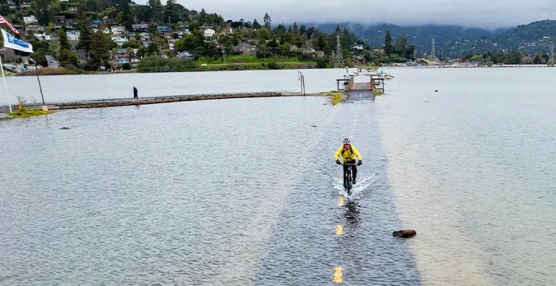
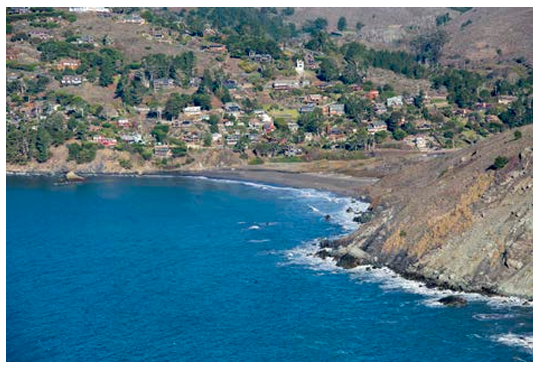
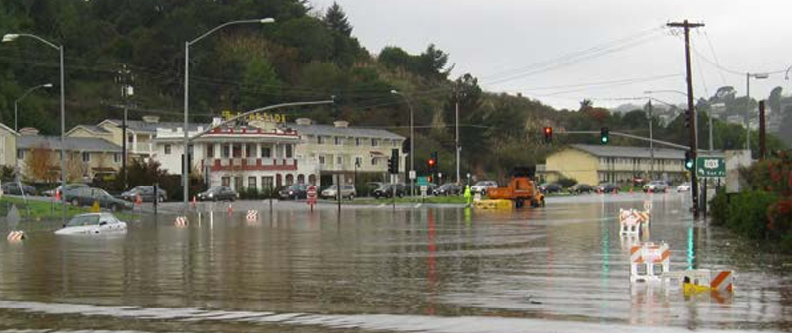
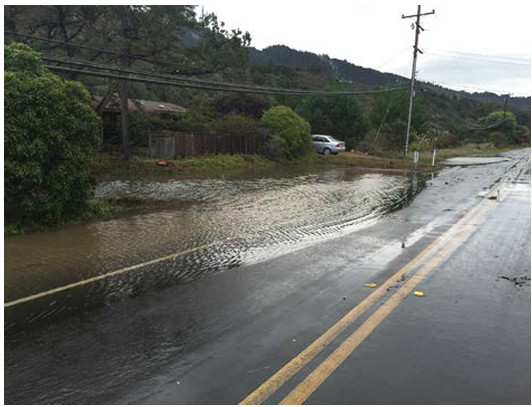
With more than 70 miles of coast and 40 miles of Bay Shore, Marin County is one of the communities most affected by sea level rise in the Bay Area. Much of our land is low lying and can easily flood. Rising sea levels will affect many parts of life here, including the safety of and access to our schools, businesses, roads, and wastewater treatment plants. Sea level rise crosses city, town, and county boundaries.
While Marin’s sea level rise vulnerabilities have been well studied and documented, there is a gap between the scale of adaptation that needs to occur and the number of adaptation projects that have been implemented. There is a shrinking window to bridge this gap before sea level rise rapidly escalates flooding and damages.
Approach
This study is intended to establish a collective and inclusive approach to decision-making that may serve as a foundation for future sea level rise planning efforts – whatever they may be. This study, which is the process to identify and recommend a collaborative approach to sea level rise planning, aims to:
- Build upon existing local, County, and community efforts
- Create and implement an inclusive and collaborative approach by:
- Enabling participation from non-agency actors, like community-based organizations, community groups, and property owners
- Enabling stakeholders to engage directly in decision-making
- Reaching consensus across all participants
This study will be directly guided and informed by:
Project Updates!
Since the project kicked off in early summer 2024, the project team has been busy with:
- Initial Kickoff Meetings: Met with select stakeholders across the county to gather early input on engagement goals, strategies, and audiences. Engaged leaders in historically under-resourced and unincorporated communities to understand the existing landscape of organizations, projects, and approaches for engaging their communities.
- Research: Conducted case study research on multi-jurisdictional, collaborative approaches to sea level rise planning. Interviewed leaders from several agencies/collaboratives to understand lessons learned.
- Stakeholder Engagement Strategy: Drafted and refined an engagement strategy and committee proposal based on input from initial kickoff meetings.
- Steering Committee: Worked with local agencies to identify steering committee members. Kicked off the Steering Committee in late November 2024.
- Stakeholder Engagement: Began stakeholder engagement focus groups in late November 2024 and will continue meeting with stakeholder groups across the county through the first few months of 2025.
Community and Stakeholder Engagement
Please take this 5-minute survey!
Results will inform our understanding of the priorities related to collaboration.
Engagement efforts kicked off in November 2024. We are now in the process of meeting with stakeholder groups across the county to gather valuable input that will inform and guide all phases of this study. Your input will:
- Improve the depth and accuracy of our understanding of existing county sea level rise adaptation efforts.
- Shape the priorities and support the development of a county-wide sea level rise adaptation governance structure and decision-making process
- Inform the recommended pathway to implementation of a proposed county-wide sea level rise adaptation governance structure and decision-making process recommendation. For questions, or to sign up for our mailing list, please email the Marin Sea Level Rise team.
Process & Timeline
This study is organized into four primary phases:
- Phase 1: Build Foundation for Robust Community Engagement & Collaboration (Spring 2024 to Early 2025) Understand community and agency priorities, challenges, and needs as they relate to sea level rise planning and project implementation, and existing efforts already underway. Conduct research on multi-jurisdictional approaches to climate-related challenges, including case studies.
- Phase 2: Identify Governance Structure Alternatives & Build Consensus on Preferred Alternatives (Early 2025 to Summer 2025) Define, prioritize, and refine collaboration approaches in collaboration with community stakeholders. Establish how a collaborative structure could relate to and build on existing county-wide and regional SLR efforts.
- Phase 3: Recommend Alternative Collaborative Structure and Decision-making Process (Summer 2025) Identify preferred collaborative approach to sea level rise planning related recommendations.
- Phase 4: Assess Internal County Staffing and Resourcing Structures (Fall 2025) Assess how the County can resource itself to support the collaborative approach to planning and implement SLR strategies for unincorporated portions of the county.
Committees
The Steering Committee and Technical Advisory Committee will support identification of the preferred countywide, multi-jurisdictional, collaborative approach to sea level rise planning. Both committees are designed to provide diverse geographic representation, while the Technical Advisory Committee is designed to represent a diversity of subject matter expertise and perspectives.
The committees will guide the study by engaging stakeholders, building trust, and incorporating community and stakeholder insight. They will provide support for study outcomes, offer governance structure recommendations with an environmental justice focus, and share insight on the political landscape and constituent needs. Membership may evolve throughout the study to ensure comprehensive representation.
Steering Committee seats were identified to provide equitable representation from elected officials across the county. The representatives were nominated by the individual entities. Recruitment for the Technical Advisory Committee has not yet begun.
| Steering Committee Seat | Representative |
|---|---|
| County Supervisor, District 3 | Stephanie Moulton-Peters |
| County Supervisor, District 4 | Dennis Rodoni |
| City of Belvedere | Kevin Burke |
| Town of Tiburon | Alice Fredericks |
| City of Mill Valley | Max Perrey |
| City of San Rafael | Maika Llorens Gulati |
| Corte Madera | Eli Beckman |
| City of Novato | Pat Eklund |
| City of Sausalito | Joan Cox, Mayor |
| City of Larkspur | Stephanie Andre |
| West Marin, Bolinas Community Public Utility District | Andrew Alexander Green |
| West Marin, Resource Conservation District | George Clyde |
| Federated Indians of Graton Rancheria | To be determined |
In this section
- BayWAVE Adapting along the Bay
- Get involved Several ways to identify sea level rise impacts and be part of exploring solutions
- Marin Watersheds Marin County is made up of 14 major watersheds with over 3000 miles of creeks flowing through them.
- C-SMART Research & Reports We conduct research and prepare reports that cover a variety of topics relevant to Marin County
- Stinson Beach Adaptation Resilience Collaboration This initiative helps the Stinson community and local agencies make informed adaptation decisions in response to sea level rise
- Marin Health and Human Services Data Dashboard See the data on climate and health factors that affect vulnerability to climate change
- Marin County Parks Bolinas Lagoon Wye Project The Wetlands Resiliency Project will restore habitat, improve road safety, and adapt to sea level rise
- One Tam Evolving Shorelines Designing for sea level rise at Bothin Marsh in Richardson Bay
Related
- USGS: Sea Level Rise in Bay Area is Going to Be Much More Destructive Than We Think A 2019 study from the U.S. Geological Survey says the predicted damage from sea level rise in California triples once tides, storms and erosion are taken into account.
- Richardson Bay Resilience Story Map An Interactive Look at Local Sea Level Rise Impacts Visit the new Richardson Bay Resilience story map for more information about sea level rise in Southern Marin.