

What is inclusive housing?
People with disabilities and older adults are disproportionately impacted by the housing crisis, facing barriers related to cost, access, discrimination, and supply. Inclusive housing is important to ensure people of all abilities have access to a home that meets their needs. Inclusive housing design standards extend beyond the baseline accessibility requirements of the American with Disabilities Act (ADA). While provisions of the ADA, universal design and inclusive design all share the goal of expanding housing access, they are distinct:
- ADA compliance sets mandatory baseline requirements that meet specific mobility and sensory-related needs.
- Universal design focuses on broad usability by creating spaces that can be used by the widest range of people regardless of age, ability or circumstance.
- Inclusive design is a methodology that draws on the full range of human diversity. It is proactive and performance-based, shaping spaces around how people actually use them throughout their lives, and involves people with disabilities in the design process.
The goal of inclusive standards is to create integrated housing where people with and without disabilities can live and thrive together.
Recommendations for Marin
We partnered with The Kelsey for technical assistance to review our existing rules and processes through a disability-inclusive lens. This work helps us integrate more inclusive and accessible standards into our housing efforts from the start, rather than as an afterthought.
An informational report will be presented to the Board of Supervisors on December 8, 2026, with specific next steps to follow based on their direction.
The documents in this list may not work with all assistive technology and are being remediated. For alternative formats, please email CDA Accessibility or phone 415-473-6269. To use the California relay service, dial 711.
- Project Summary Report (0.24 MB) — Summary report of the Advancing Disability-Forward Housing in Marin County and the Bay Area prepared by The Kelsey, including an overview of stakeholder engagement and additional policy and program recommendations.
- Cost and Feasibility Study (1.37 MB) — This study seeks to understand the cost of implementing ten key features of inclusive and accessible design in elevator-served multifamily buildings of at least 50 units in California’s Bay Area. This study provides specific analysis for Marin County.
- Marin Housing Trust Fund Guideline Recommendations (0.15 MB) — This memo provides recommendations for how the Trust Fund can increase the supply of disability-forward housing; housing that is affordable, accessible, and inclusive for people with and without disabilities.
- Objective Design Standards Menu of Options (0.21 MB) — This menu of options is structured to help project teams quickly identify and implement design interventions that address specific barriers in the built environment. By utilizing this menu, architects and developers can tailor their projects to be more welcoming and habitable, ensuring that the housing stock is resilient and inclusive for generations to come.
- Marin County Development Code Review (0.08 MB) — This document presents reviewed sections of the Marin County Development Code. The code analysis and recommendations below present opportunities for Marin County to create clearer pathways for increasing accessible and more universally designed housing.
Addressing a community need
A critical and growing need in Marin
While 26% of people live with a disability in the United States, it is estimated that less than 6% of the national housing supply is designed to be accessible. The need for these standards is particularly important in Marin County, where approximately one in ten individuals has a disability. While disability affects all age groups (in Marin, 43% of disabled individuals are under the age of 65), the disabled population is typically older on average than the nondisabled population because many individuals age into disabilities over the course of their lives. Marin holds the highest proportion of older adults 65 and over (23%) of all nine Bay Area counties and has seen a 24% increase in the proportion of older adults with a disability over the last decade, signaling a growing need.
Housing Element implementation
The County’s Housing Element update emphasized a critical need for more inclusive and accessible housing as a gap in our housing stock. To implement Housing Element Program 14 (Universal Design and Visitability), the County partnered with The Kelsey, subject-matter experts in inclusive design, along with the Association of Bay Area Governments (ABAG) to develop tools and resources. The Kelsey evaluated existing County policies and provided targeted recommendations to incorporate additional incentives to advance inclusive housing design standards in residential buildings, with a focus on new multi-unit structures.
Stakeholder feedback
From March to September 2026, we gathered stakeholder feedback to inform the development of recommendations. Engagement included a range of focus groups directly with people with disabilities and community-based organization that represent the interests of people with disabilities, architects and designers, affordable and market-rate housing developers, local jurisdiction staff from around the Bay Area, Marin County Planning Directors and housing funders.
-
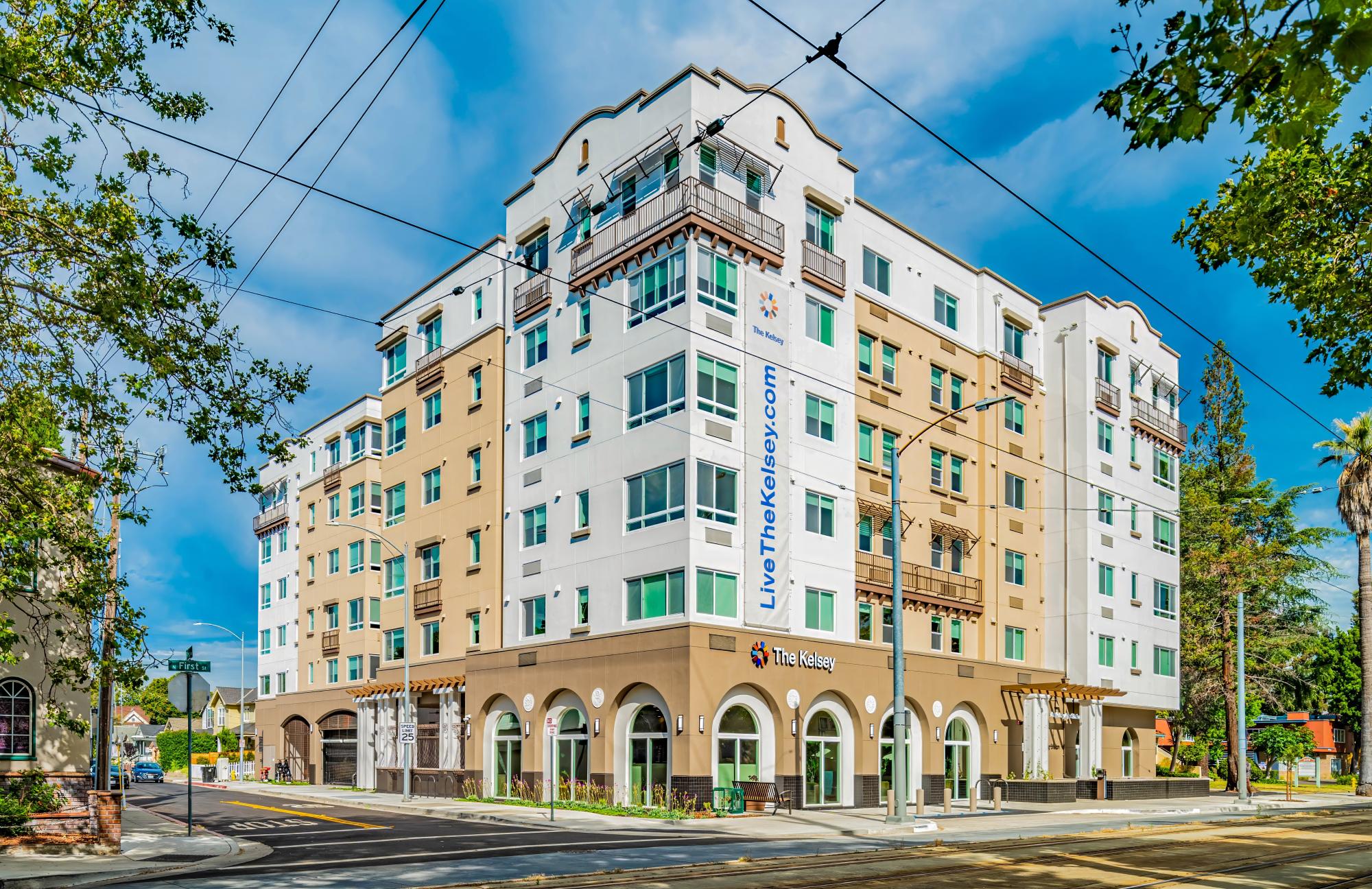 Exterior view of The Kelsey's Ayer Station 115 fully inclusive, mixed-income housing community in San Jose. Photo credit: Bruce Damonte.
 -
 Interior common room of The Kelsey's Ayer Station in San Jose designed using inclusive housing standards. Photo credit: Bruce Damonte.