
Body of News Release
UPDATE 3/25: The Board accepted the Countywide Plan Implementation Programs report and the Housing Element Progress Report.
Marin County, CA – It’s time for progress reports on how the County of Marin’s comprehensive general plan – called the Countywide Plan (CWP) – is coming along as well as a key section on housing that was updated in 2023.
The Marin County Board of Supervisors will receive an update on CWP implementation during its March 25 regular meeting. Staff from the Marin County Community Development Agency (CDA) will present an overview of the 234 programs for which CDA’s partner agencies are responsible. Then, staff will brief the Supervisors and public about the progress on the 2023-2031 Housing Element portion of the CWP.
Many of the County’s most important efforts protecting communities and the environment were first envisioned in the CWP, and have taken the form of robust planning, action and voter-supported funding on wildfire safety, open space enhancement, and transportation improvements.
For the current Housing Element cycle, the County’s goal is to plan for at least 3,569 new homes in the unincorporated areas of Marin; each town, city, and county in California is responsible for its own Housing Element by law. Each municipality is assigned a Regional Housing Needs Assessment (RHNA), the projected number of homes needed as determined by regional and state housing agencies. In Marin, the potential locations for those homes were detailed within the CWP’s Housing Element.
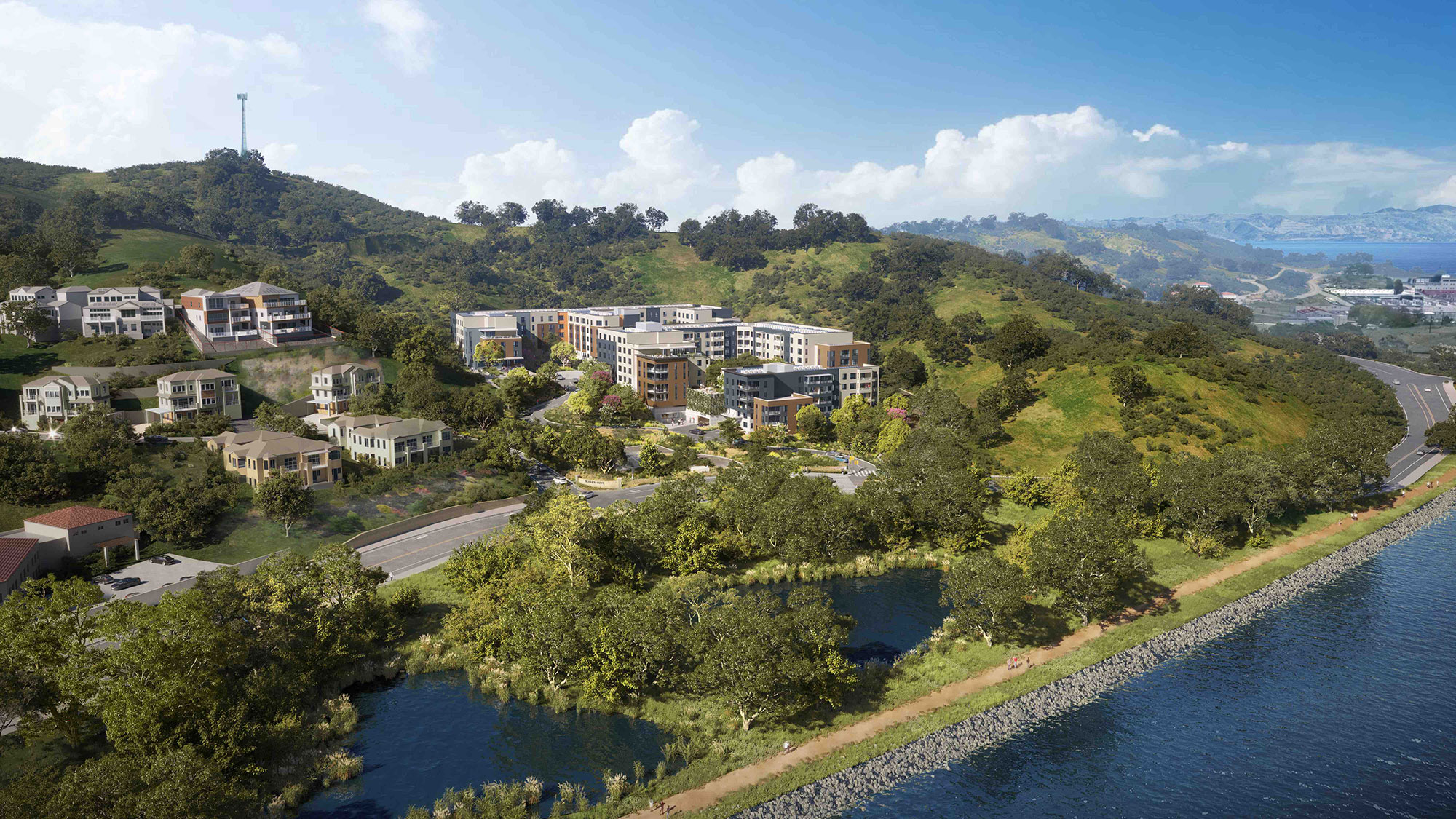
In 2024, 67 new residential units on properties in unincorporated Marin received building permits. Added to the 159 permits a year earlier, the combined 226 total units account for 6.3% progress toward the cumulative RHNA goal. In total, 472 units are under consideration, including 204 units that have been approved to go forward but have not yet been granted building permits. Not included in the 268 are the Oak Hill affordable and workforce housing development near San Quentin Village; 230 units are being permitted by the State of California but can count toward the County of Marin’s RHNA requirement.
All told, there are over 1,400 new units in the County’s development pipeline. The County has six more years to reach the goal of 3,569.
Plans for housing include a range of household income levels. Marin’s 3,569 total units through 2031 breaks down this way:
- 1,100 units for households earning a very-low income and below;
- 634 units for households earning a low-income;
- 512 units for households earning a moderate-income; and
- 1,323 units for households earning an above-moderate income.
Adding accessory dwelling units (ADUs) on existing properties is proving to be a popular way for the County to make progress on meeting some of the housing needs of the community and reaching the RHNA goal. Of the County’s 67 building permits issued in 2024, 48 were ADUs and 19 were single-unit residences. Forty-two units received certificates of occupancy in 2024, including 31 ADUs, 10 single-unit residences, and one mobile home.
Major program accomplishments in the first two years of the 2023-2031 Housing Element cycle include production and support of ADU development, creation of mapping tools, housing for farmworkers, and devoting funds to help keep people in their homes.
The annual reports are required by law to make sure counties are complying with state policies. If the Board accepts the Housing Element Progress Report for 2024, CDA staff will submit it to the California’s Department of Housing and Community Development and the Office of Land Use and Climate Innovation.
The March 25 Board of Supervisors meeting begins at 9 AM in Suite 330 of the Marin County Civic Center, 3501 Civic Center Drive, San Rafael. Anyone may watch or participate in the meeting in person or online. See the instructions on the Board’s agenda webpage on how to participate.