
What is bidirectional charging?
Bidirectional charging, or two-way charging, allows battery energy to flow in two directions. An EV usually draws electricity from the grid when needed to charge. But, some EVs can also deliver energy to the grid or other devices outside the vehicle (such as a small appliance).
Bidirectional charging types
There are three types of bidirectional charging:
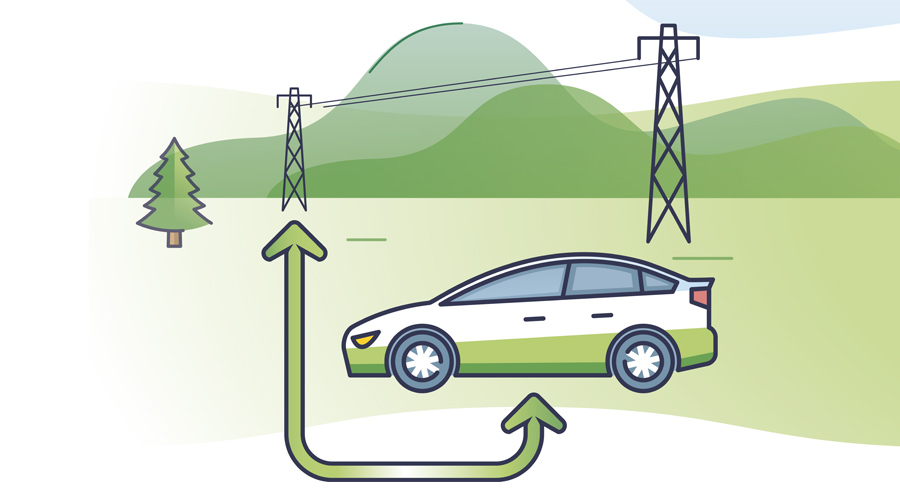
Vehicle to grid (V2G)
EV can deliver and draw electricity to and from the grid.
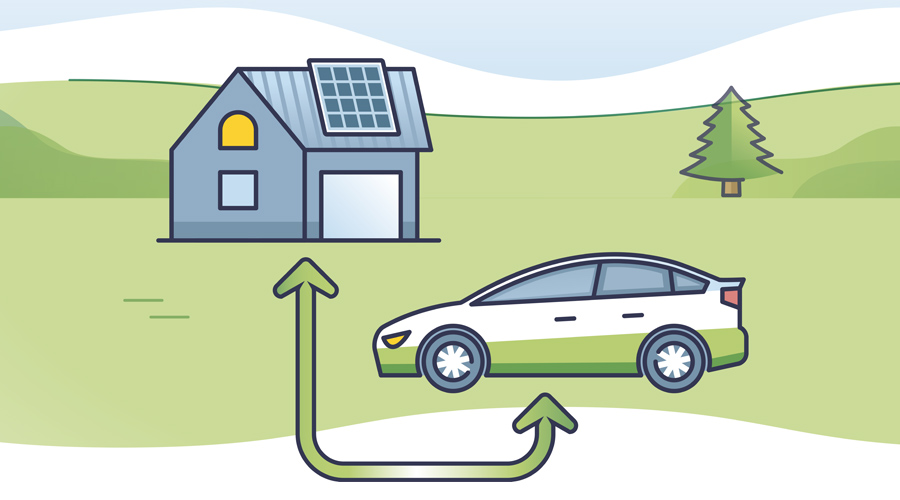
Vehicle to home (V2H)
EV can power a home using the home’s electrical panel.
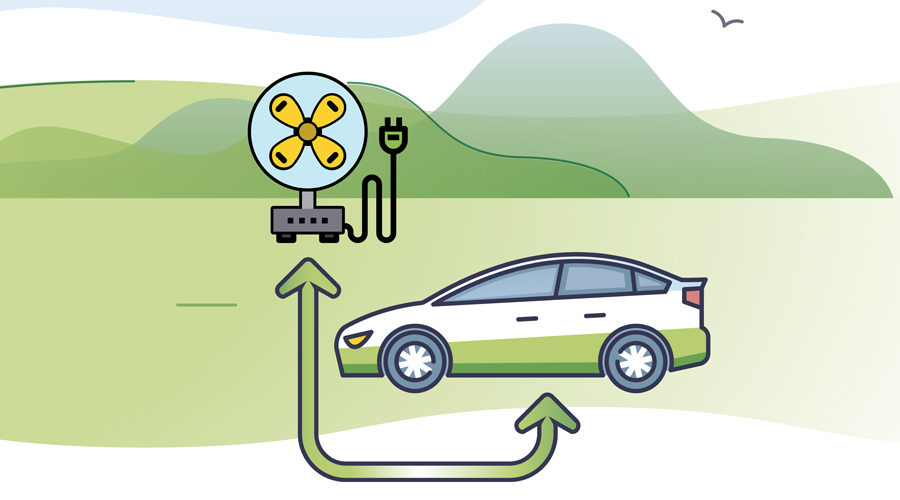
Vehicle to load (V2L)
Allows EV to power appliances or other outside sources.
How does bidirectional charging support a more resilient power grid?
A resilient grid is a strong power system that keeps giving electricity without long or widespread power cuts. Grid resiliency is important for a modern society. Here are two ways that EVs support a more resilient power grid:
- Providing power to the grid during peak times (4 to 9 pm), when more electricity is being used, can help reduce loads. EVs can then recharge during off-peak hours when the energy demands are lower.
- Serving as a backup power source during outages can help reduce disruptions. Essential services, businesses, and households will continue to have electricity.
How does it benefit me?
An EV with bidirectional charge abilities can serve as a backup power source. A fully-charged EV battery has the potential to power your home for up to three days or even longer.
Download a printer-friendly version of the Bidirectional Charging and Grid Resiliency factsheet.
Related
-
Bidirectional charging
This factsheet gives an overview of what bidirectional charging is, the different types of bidirectional charging, and how it can support a more resilient power grid.
-
At-home EV charging installation
Learn how to get at-home charging for your EV.
-
Multifamily EV charging
Learn how you can get EV charging at your apartment or residential building.